ai-cloud

GPU Node Health Check for AI Cloud Infrastructure

Track server health and Machine readiness through the infrastructure layer. BareMetalHost conditions, BMC connectivity, inspection results, and Machine lifecycle state show whether capacity is available for tenant clusters.

Trusted by the fastest-growing AI cloud providers
Problem

Why GPU Node Health Monitoring Falls Short

GPU node health is hard to diagnose when hardware state, Machine readiness, and tenant cluster ownership live in separate systems.

Generic Tools Miss GPU Metrics

Kubernetes status alone does not describe BMC connectivity, bare metal inspection results, or GPU driver health.

No Per-Tenant Visibility

Without a clear Machine-to-tenant relationship, operators spend time tracing which customer environment owns affected capacity.

Reactive Checks Risk SLA Breaches

Health signals without lifecycle context make it harder to decide whether to repair, release, or reprovision capacity.

Solution

Server Health and Machine Readiness in One Workflow

Use infrastructure health signals for the server, vMetal lifecycle state for the Machine, and vCluster Platform observability for the tenant cluster using that capacity.

Purpose-Built for GPU Node Health at Scale

Combine server health signals, Machine readiness, tenant cluster observability, and clear capacity ownership for GPU node health checks.

Observability

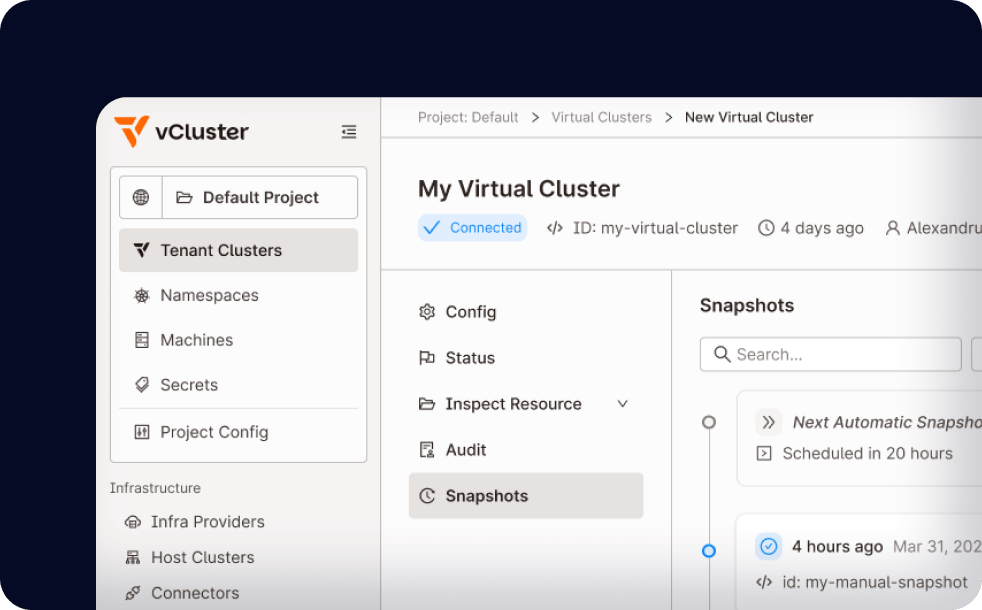
GPU Server Health Signals

Use BareMetalHost conditions, BMC connectivity, inspection results, and the GPU software stack to evaluate server health.

  • Tenant cluster observability
  • Server health signals
  • Machine readiness state
Fleet Management

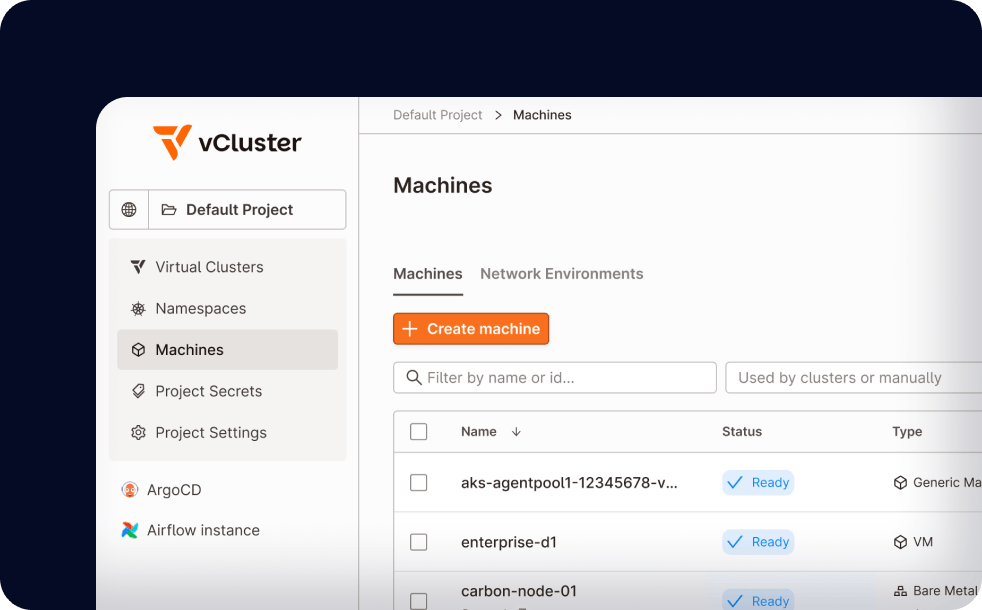
Machine Readiness Across the Fleet

Track whether each Machine request has been scheduled, provisioned, joined to its target cluster, and marked ready.

  • Single pane of glass for all clusters
  • Quota and template management at scale
  • RBAC policies applied fleet-wide
Tenant Isolation

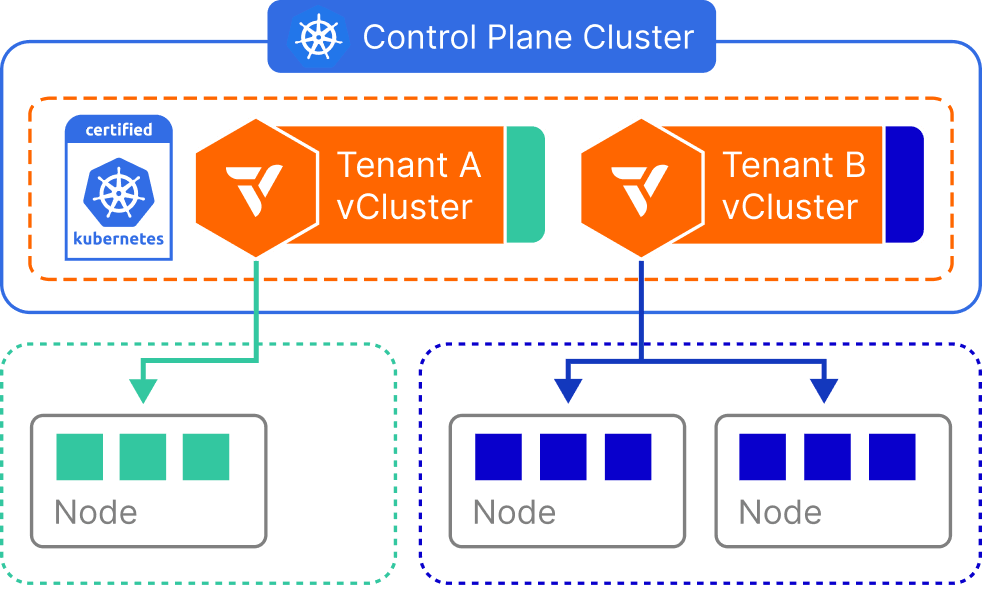
Private Nodes Per Tenant

Private Nodes dedicate worker capacity to one production tenant cluster at a time, making ownership of affected capacity clear.

  • Private Nodes with dedicated physical hardware per tenant
  • Per-tenant CNI and storage
  • Tenant-scoped capacity ownership
Dynamic Provisioning

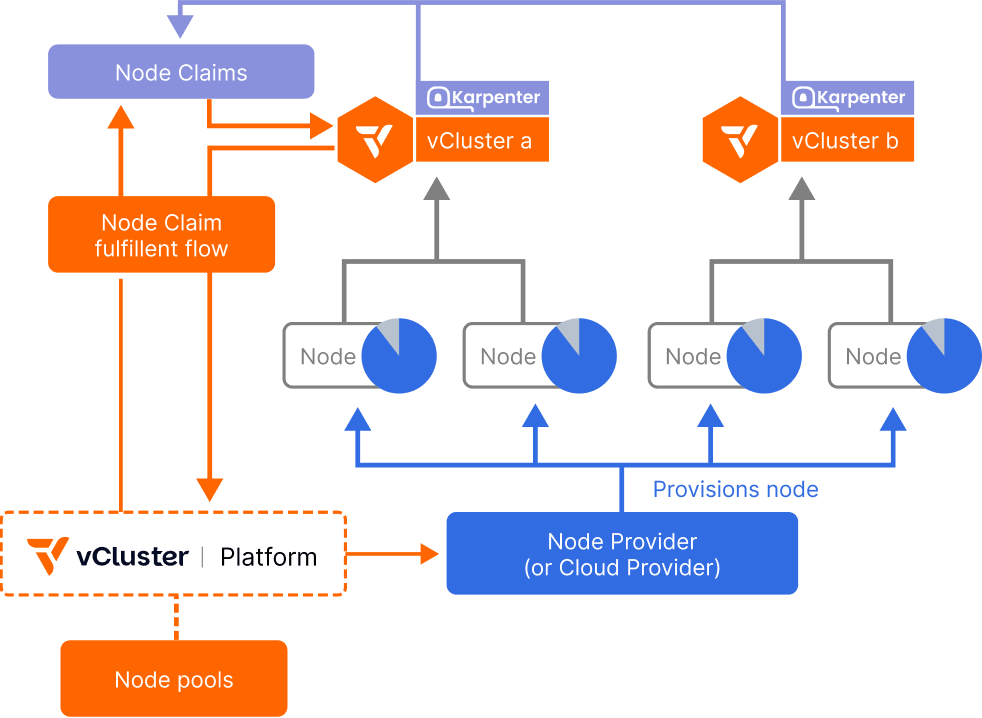
Capacity Requests Through Auto Nodes

Auto Nodes can maintain configured Private Node capacity by creating and deleting Machine requests through vMetal.

  • Bare metal GPU nodes on demand
  • Machine requests through Auto Nodes
  • Reduces manual node remediation effort
Bare Metal Layer

Machine Lifecycle Visibility

vMetal exposes the lifecycle of each Machine claim and the server inventory available to satisfy future requests.

  • Automated Metal3 provisioning
  • Full machine lifecycle under one API
  • Rack to decommission in one workflow
Why vCluster

This isn’t a side project. Behind every vCluster deployment is 5+ years of deep K8s engineering, security hardening, and battle-tested infrastructure work at massive scale.

100K+
GPUs Powered
50+
GPU Clouds & F500s
<45
Days to Launch
30K
GitHub Stars

Get Started in 3 Steps

1
Schedule a Demo

Talk to our team about your stack

2
Deploy vCluster

Deploy vCluster on your infra in minutes

3
Onboard Your Tenants

Go live with a hyperscaler-grade tenant experience in days

FAQs

What is a GPU node health check and why does it matter for AI clouds?

A GPU node health check should cover both the server and its current Machine claim. Server health comes from BareMetalHost conditions, BMC connectivity, inspection results, and the GPU software stack. Machine readiness shows whether scheduling, provisioning, and cluster attachment completed.

How does vCluster Platform support GPU node health check workflows?

vCluster Platform provides centralized tenant cluster operations and observability. vMetal adds Machine lifecycle state, while the selected bare metal and GPU tooling supplies hardware-specific health signals.

Can I scope GPU node health alerts to individual tenants?

Private Nodes assign dedicated worker capacity to one production tenant cluster at a time. Operators can relate a Machine and its server state to the tenant cluster currently using that capacity.

Does vCluster Platform handle bare metal GPU node lifecycle management?

Yes. vMetal tracks Machine requests through scheduling, provisioning, cluster attachment, deletion, cleaning, and return to available inventory.

How does Auto Nodes help maintain GPU node health in production?

Auto Nodes can maintain configured Private Node capacity by creating and deleting Machine requests. Hardware diagnosis and recovery still follow the server and infrastructure driver health signals.

Which GPU cloud providers use vCluster Platform for fleet and node management?

vCluster powers 100K GPUs across 50+ GPU Clouds & Fortune 500s and provides centralized operations for tenant cluster fleets.

Strengthen Your GPU Node Health Strategy

See how vCluster Platform brings built-in observability and fleet management to your GPU infrastructure.