platform-eng
GPU Tenant Isolation Kubernetes with Dedicated Workers
Separate GPU tenants at the API and worker layers. vMetal provisions infrastructure, and vCluster assigns dedicated Private Nodes with optional vNode runtime hardening.
Separate GPU tenants at the API and worker layers. vMetal provisions infrastructure, and vCluster assigns dedicated Private Nodes with optional vNode runtime hardening.
Standard Kubernetes forces a painful choice between security and efficiency.
Tenants can see cluster-wide agents and other tenants' nodes. Namespace boundaries do not meet compliance requirements for shared GPU environments.
Separate control-plane servers per tenant consume capacity and increase the number of infrastructure stacks your team must operate.
Isolation choices change the runtime and device-access design. Validate GPU drivers, networking and workload performance instead of assuming a universal VM penalty.
vMetal provisions machines, and vCluster provides independent tenant APIs and dedicated GPU Private Nodes. Optional vNode hardening and Netris network segmentation add boundaries alongside your GPU driver and workload policies. Lintasarta runs 170+ tenant clusters in production.
From control plane virtualization to kernel-level workload protection, each layer adds its own boundary.
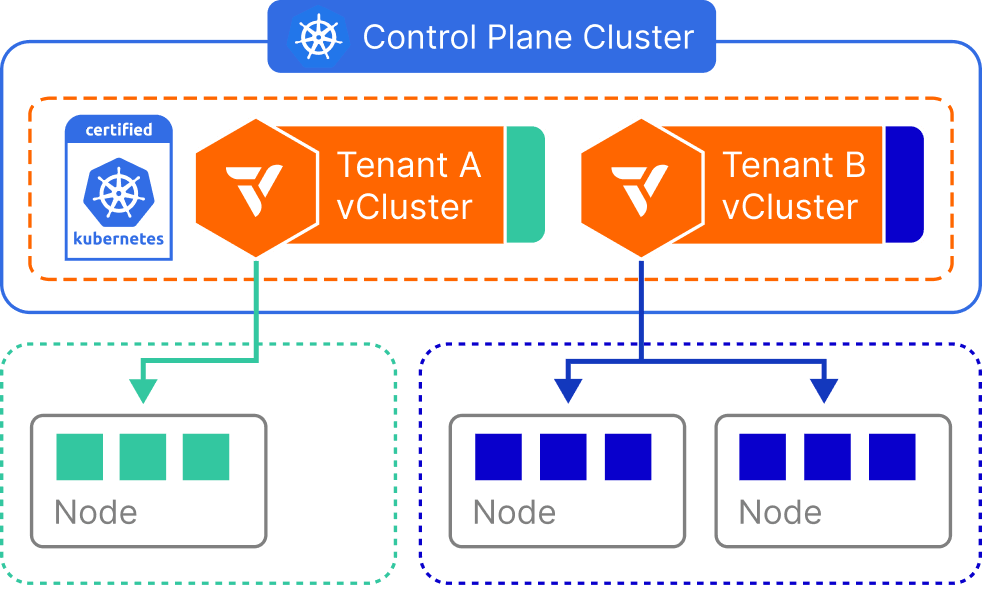
Each tenant has an independent Kubernetes API, data store and RBAC boundary. Lightweight control-plane hosting reduces dedicated server requirements for GPU tenant boundaries; Private Nodes keep production workers tenant-specific.
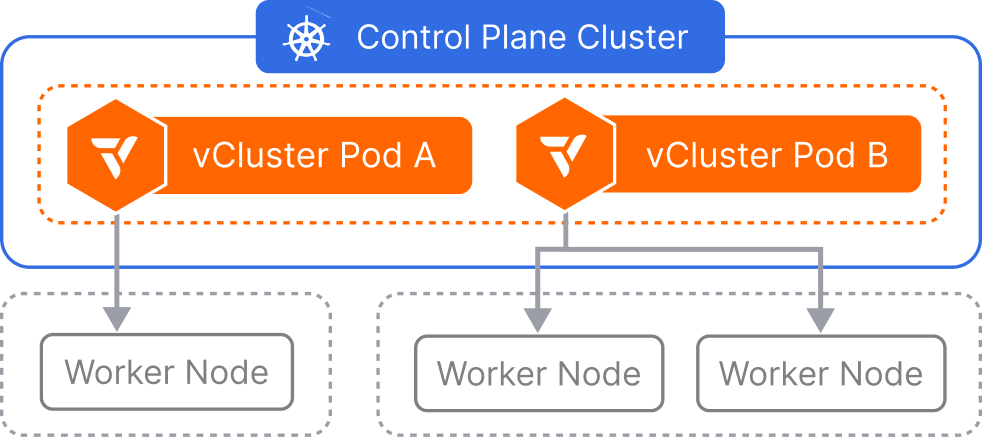
Private Nodes dedicate worker capacity to one tenant cluster, with its own CNI and storage configuration. For GPU tenant boundaries, select physical servers or VMs according to the required infrastructure boundary.
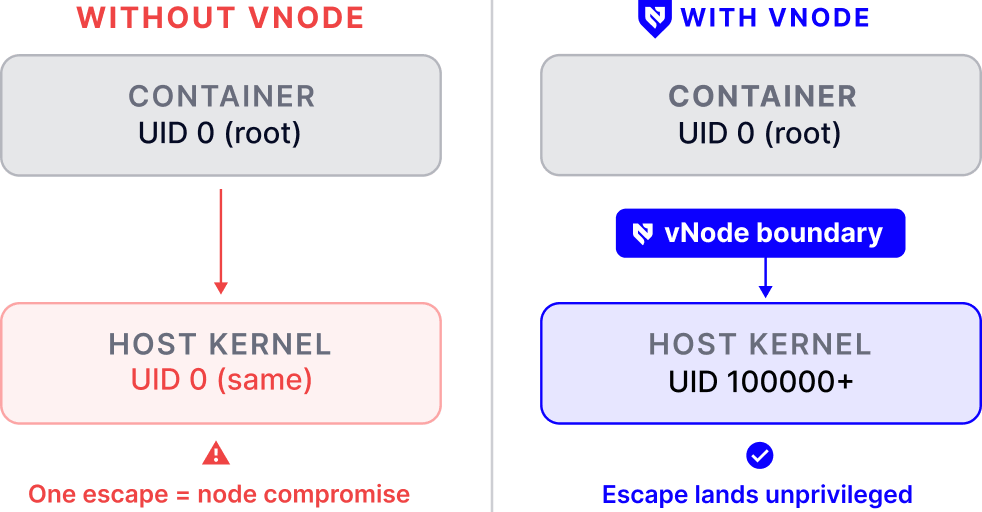
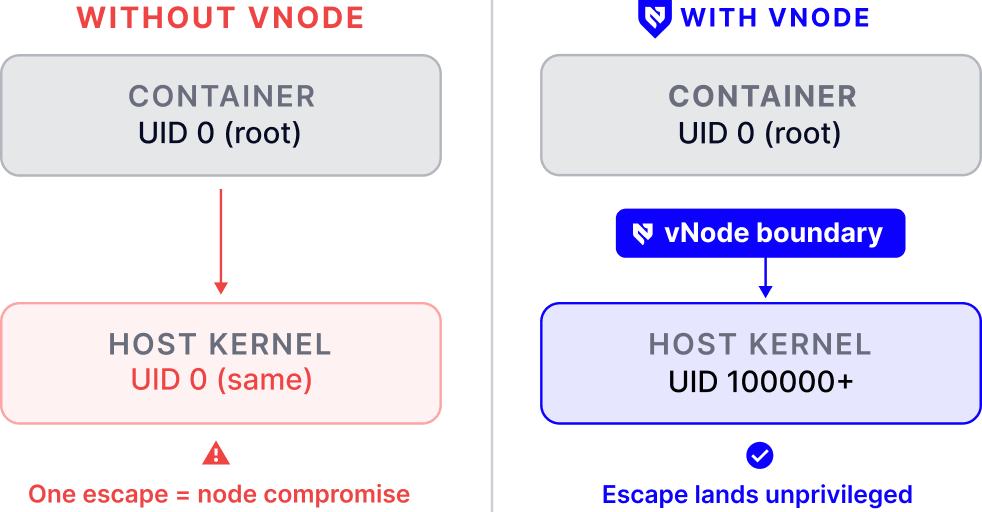
vNode uses Linux user namespaces and seccomp to restrict workload privileges and system calls. It adds runtime hardening for GPU tenant boundaries without a guest kernel or hypervisor, complementing dedicated workers rather than allocating GPUs.
Combine separate tenant APIs, dedicated Private Nodes and vNode runtime hardening for GPU tenant boundaries. These boundaries help limit tenant incidents; infrastructure patching, least privilege and application security remain part of the deployment.
CNCF-certified Kubernetes provides standard APIs for GPU tenant boundaries. Tenants can use familiar tooling and cluster-scoped resources; validate GPU drivers, storage, networking and runtime requirements for the selected infrastructure.
This isn’t a side project. Behind every vCluster deployment is 5+ years of deep K8s engineering, security hardening, and battle-tested infrastructure work at massive scale.
Talk to our team about your stack
Deploy vCluster on your infra in minutes
Go live with a hyperscaler-grade tenant experience in days
vCluster gives each tenant an independent Kubernetes API, data store and RBAC scope. Private Nodes dedicate worker capacity to that tenant, including its own CNI and storage configuration. vMetal orchestrates the machines underneath. This separates tenant administration and worker placement; shared infrastructure, application permissions and network policies still require an explicit security design.
Yes. Namespace isolation shares a single API server, data store, and control plane across all tenants, so one misconfigured tenant can observe or affect others. vCluster gives each tenant a separate control plane, and tenants can't see other tenants' nodes, pods, or cluster internals. For GPU environments where workloads are often untrusted or come from competing teams, that difference is critical.
Dedicated Private Nodes remove cross-tenant workload placement from those workers. Bare metal avoids a hypervisor layer, but this is not a throughput or latency guarantee. GPU drivers, workload configuration, network fabrics and storage can still influence performance. vNode adds runtime hardening using the Linux kernel; benchmark the selected stack against the workload and service levels you intend to offer.
Capacity depends on control-plane sizing, tenant API activity, workload demand and available workers. Lightweight tenant control planes avoid dedicated control-plane servers for each customer, while Private Nodes still need dedicated worker capacity. Lintasarta's 170+ tenant clusters are a named deployment example, not a universal cluster limit. Size and test your fleet against its own availability and performance objectives.
Tenants can receive cluster-admin within their own Kubernetes environment, including permission to install CRDs and supported operators. With Private Nodes, worker-level GPU tooling belongs to that tenant's dedicated nodes. Platform administrators retain infrastructure controls and define supported configurations. Private Node clusters do not sync workload resources to the control plane cluster, so integrations must support direct tenant worker operation.
vCluster Labs software powers 100K+ GPUs and 1M+ CPUs, serving 50+ GPU clouds & Fortune 500s combined. In production, Lintasarta operates 170+ tenant clusters, while Boost Run completed its managed Kubernetes launch in under 45 days from the decision. These named deployments provide scale and launch examples for teams evaluating the platform for their own infrastructure.
Explore independent tenant control planes, dedicated GPU workers and optional runtime hardening.
