platform-eng

Kubernetes Node Autohealing for GPU Clouds

Build Kubernetes node autohealing workflows on clear tenant boundaries, centralized observability, and a consistent Machine lifecycle. Private Nodes contain worker capacity within one production tenant cluster.

Trusted by the fastest-growing AI cloud providers
Problem

Why GPU Node Failures Cost You More

Node recovery becomes harder when cluster health, hardware state, and tenant ownership are split across disconnected systems.

Downtime Kills Inference Revenue

A failed GPU node can reduce the capacity available to its tenant cluster until workloads and infrastructure are recovered.

Manual Remediation Slows Teams

Manual coordination across Kubernetes, bare metal, and network systems extends recovery work.

Namespace Isolation Amplifies Blast Radius

Shared worker capacity makes node ownership and affected tenant boundaries harder to reason about during an incident.

Solution

The Foundations for Kubernetes Node Autohealing

vCluster provides tenant-scoped clusters and centralized operations. vMetal provides the Machine lifecycle, while the selected infrastructure tooling remains responsible for hardware health and repair.

Built for Resilient GPU Infrastructure at Scale

Kubernetes node autohealing depends on cluster health signals, tenant-scoped capacity, Machine lifecycle automation, and infrastructure repair tooling.

Automated Operations

Centralized Node Health Operations

Use vCluster Platform observability alongside infrastructure health signals to coordinate node recovery across tenant clusters.

  • Cluster and Machine health context
  • Tenant cluster observability
  • Infrastructure health signals
Hardware Isolation

Private Nodes Per Tenant Cluster

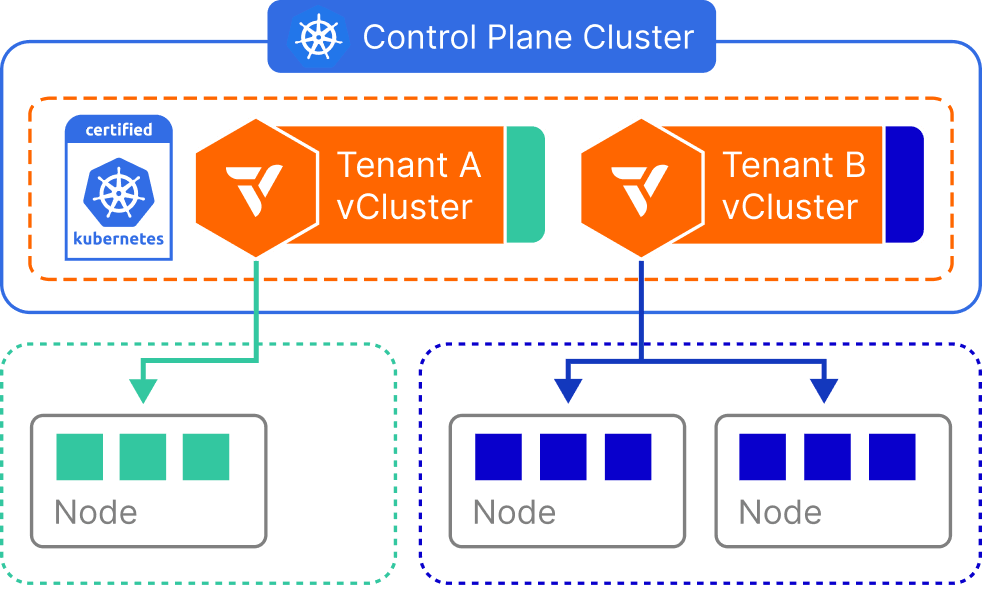
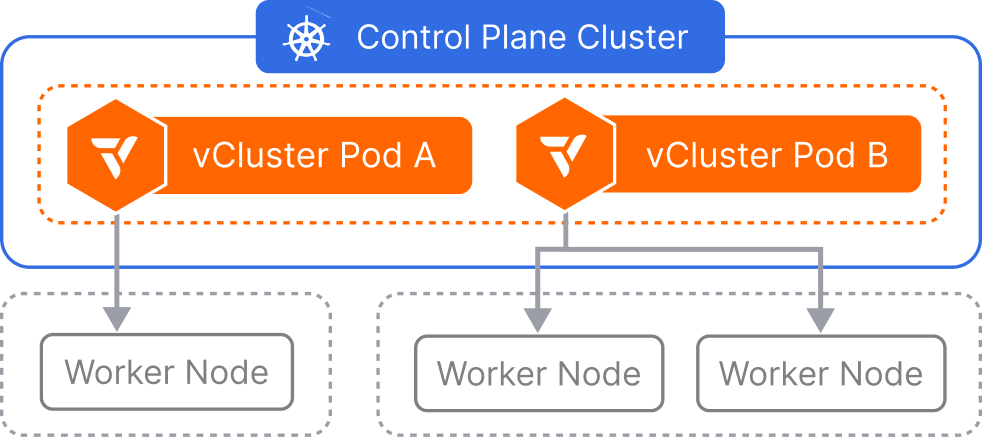
Private Nodes assign dedicated worker capacity to one production tenant cluster at a time.

  • Per-tenant Private Nodes with workload isolation
  • Per-tenant CNI and storage
  • Clear tenant capacity ownership
Dynamic Provisioning

Machine Requests for Replacement Capacity

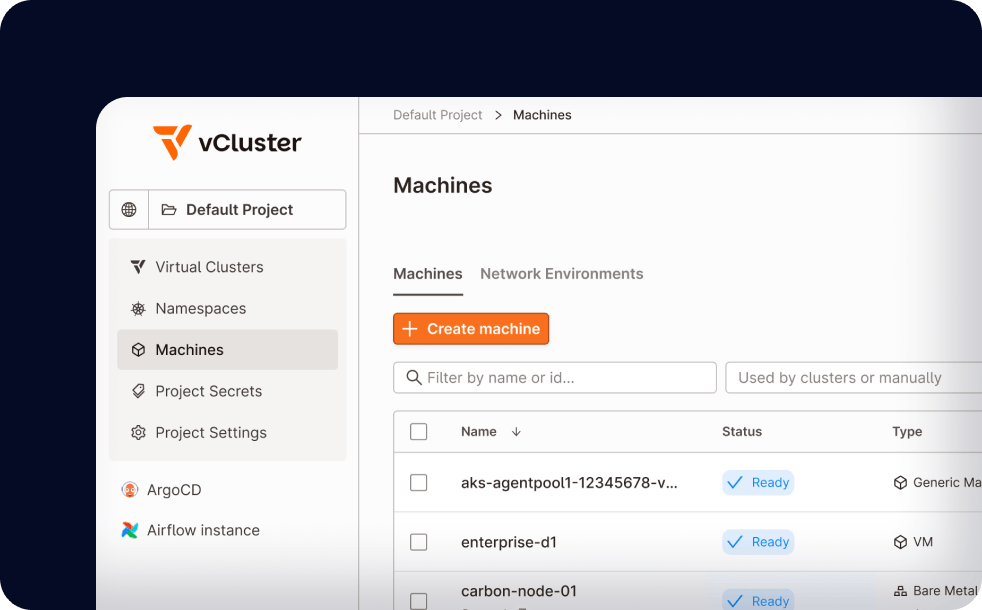
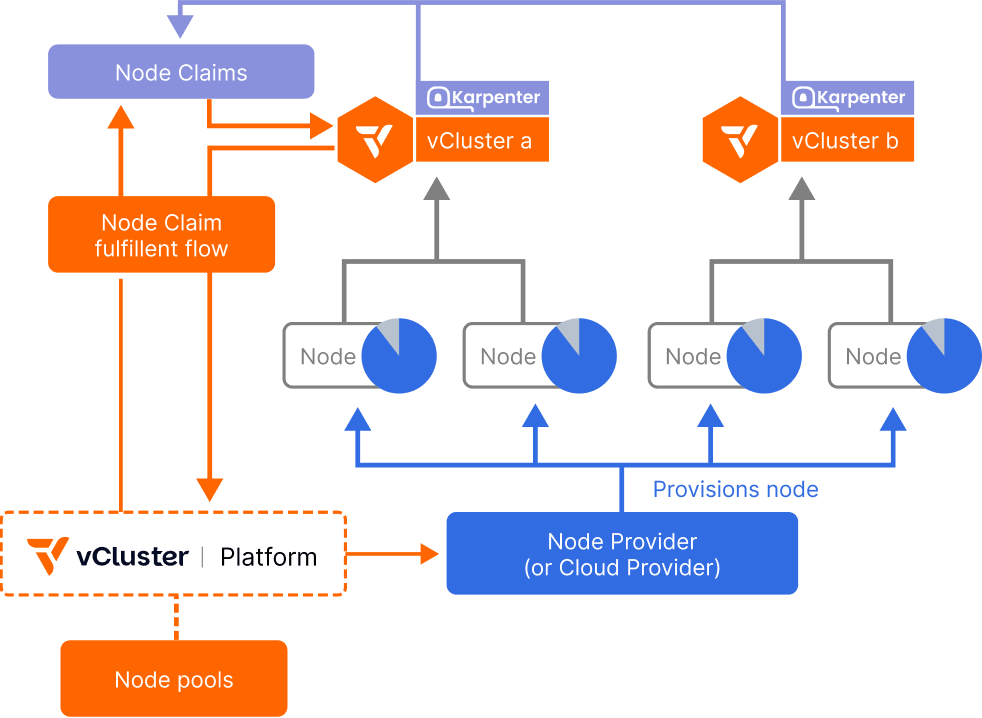
Auto Nodes can create and delete Machine requests to maintain configured Private Node capacity through vMetal.

  • Machine requests through Auto Nodes
  • Configured replacement capacity
  • vMetal Machine lifecycle
Fleet Operations

Fleet-Wide Tenant Cluster Operations

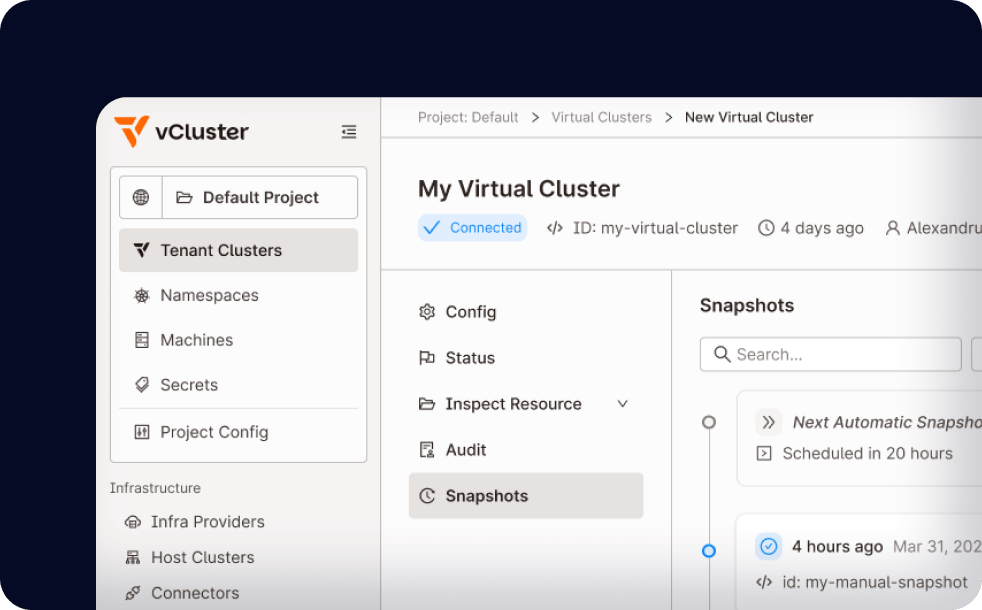
Manage tenant clusters through one UI, CLI, and API with templates, access, policy, and fleet observability.

  • Single pane for all clusters
  • Policy-driven node health management
  • UI, CLI, and API access
Tenant Isolation

Isolated Control Planes Per Tenant

Each tenant cluster has its own virtualized control plane and RBAC boundary, separate from worker node recovery operations.

  • Own API server per tenant
  • Failure scoped to one tenant
  • Recovery separate from control plane
Why vCluster

This isn’t a side project. Behind every vCluster deployment is 5+ years of deep K8s engineering, security hardening, and battle-tested infrastructure work at massive scale.

100K+
GPUs Powered
50+
GPU Clouds & F500s
<45
Days to Launch
30K
GitHub Stars

Get Started in 3 Steps

1
Schedule a Demo

Talk to our team about your stack

2
Deploy vCluster

Deploy vCluster on your infra in minutes

3
Onboard Your Tenants

Go live with a hyperscaler-grade tenant experience in days

FAQs

What is node autohealing in Kubernetes and why does it matter for GPU clouds?

Kubernetes node autohealing combines health detection, workload handling, infrastructure repair, and replacement capacity. vCluster provides the tenant cluster and Private Node boundary, while infrastructure-specific systems supply hardware health and repair actions.

How does vCluster Platform support node recovery across tenant clusters?

vCluster Platform provides centralized tenant cluster operations and observability. Private Nodes keep worker capacity scoped to one production tenant cluster, and vMetal exposes the Machine lifecycle behind that capacity.

How do bare metal Machine workflows support node recovery?

For bare metal, vMetal provisions Machines and joins completed servers to the target tenant cluster. Server diagnosis and repair follow the BareMetalHost, BMC, inspection, and infrastructure driver workflows.

How does Private Nodes improve node autohealing for GPU environments with tenant isolation?

Private Nodes assign dedicated worker capacity to one tenant cluster at a time, so node ownership and the affected tenant environment remain clear during recovery work.

Is vCluster used for GPU tenant cluster operations at scale?

vCluster powers 100K GPUs across 50+ GPU Clouds & Fortune 500s and provides centralized operations for tenant cluster fleets.

Can node autohealing be managed via GitOps or IaC in vCluster Platform?

Cluster and Machine configuration can be managed through APIs and established automation. Recovery actions must still follow the capabilities of the selected infrastructure and health tooling.

Plan GPU Node Recovery Across Your Fleet

See how vCluster and vMetal provide the tenant and Machine lifecycle foundations for node recovery workflows.