ai-cloud
Provisioning Orchestration for AI Clouds
vMetal places one stable Machine API above interchangeable physical and virtual infrastructure drivers. vCluster uses that capacity for Private Nodes and managed tenant cluster products.
vMetal places one stable Machine API above interchangeable physical and virtual infrastructure drivers. vCluster uses that capacity for Private Nodes and managed tenant cluster products.
AI cloud infrastructure becomes difficult to automate when every provisioning stack exposes a different API and lifecycle.
Disconnected provisioning systems create separate workflows for bare metal, VMs, networking, and cluster attachment.
Direct dependencies on driver-specific APIs make infrastructure changes ripple into customer-facing automation.
Manual Machine lifecycle work delays provisioning, release, cleaning, and capacity reuse.
vMetal provides one stable Machine API above infrastructure-specific drivers. Higher layers request capacity consistently while drivers keep ownership of their provisioning mechanics.
vMetal unifies physical and virtual Machine provisioning behind one API, while vCluster turns that capacity into tenant cluster products.
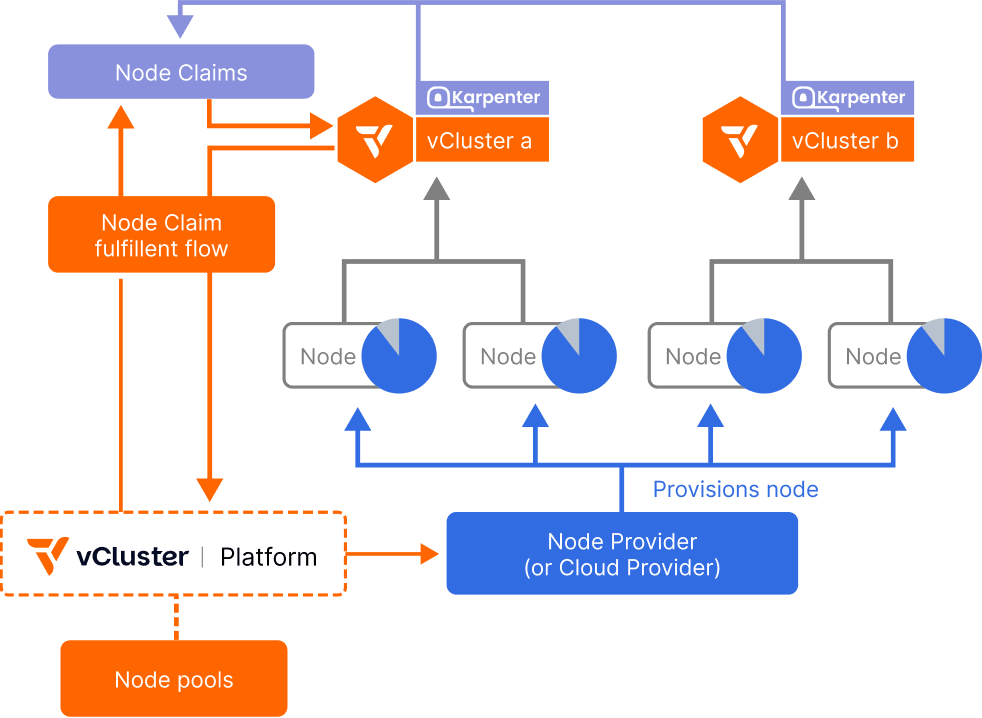
vMetal sends a Machine request to the selected driver and tracks the result through a consistent lifecycle.
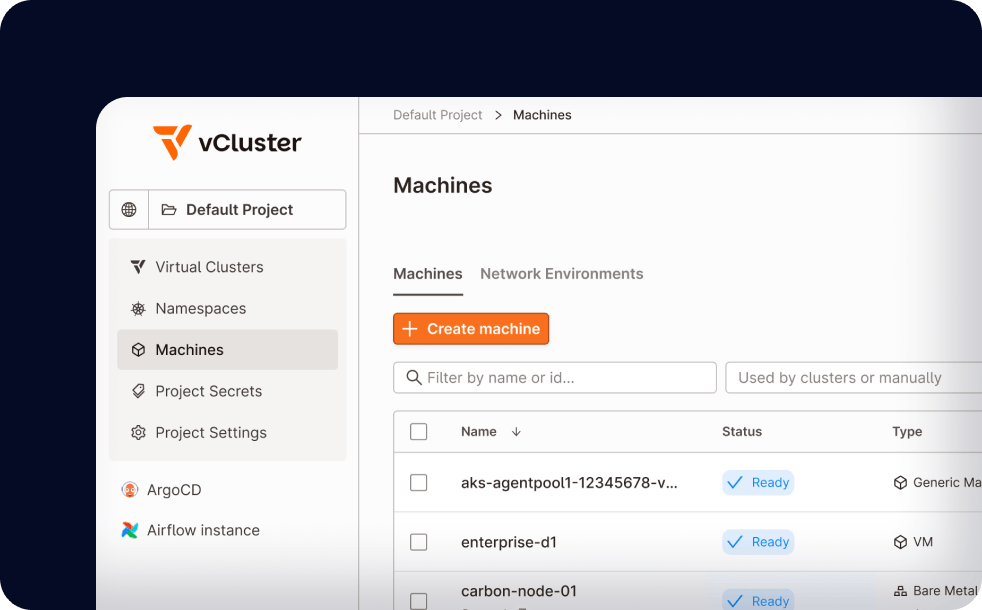
Auto Nodes can create and delete Machine requests to maintain Private Node capacity for tenant clusters.
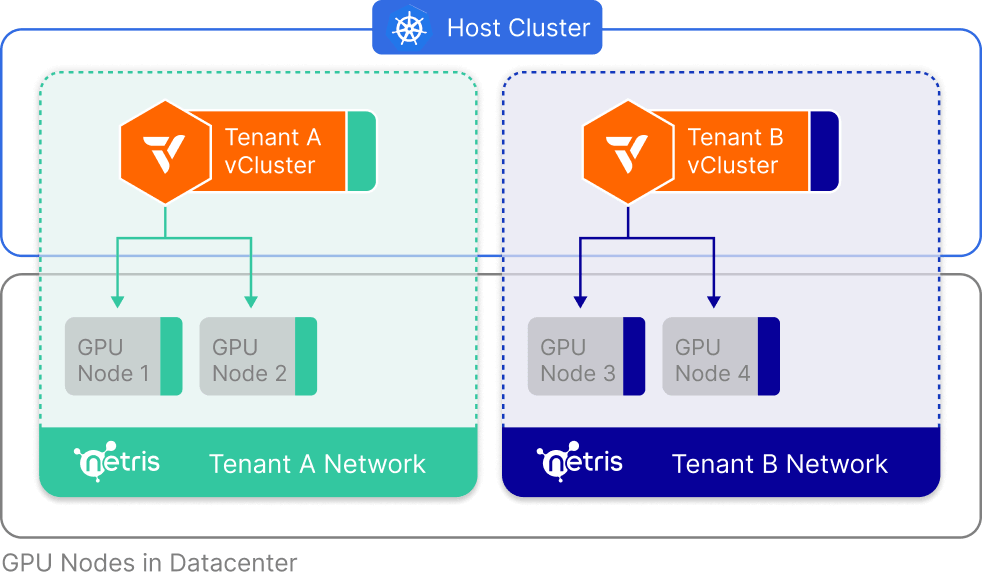
Network configuration follows the selected driver. Metal3 can integrate with Netris for hardware-backed L2 isolation when configured.
After provisioning, a Machine requested for tenant capacity can join its target cluster automatically as a standard Kubernetes node.
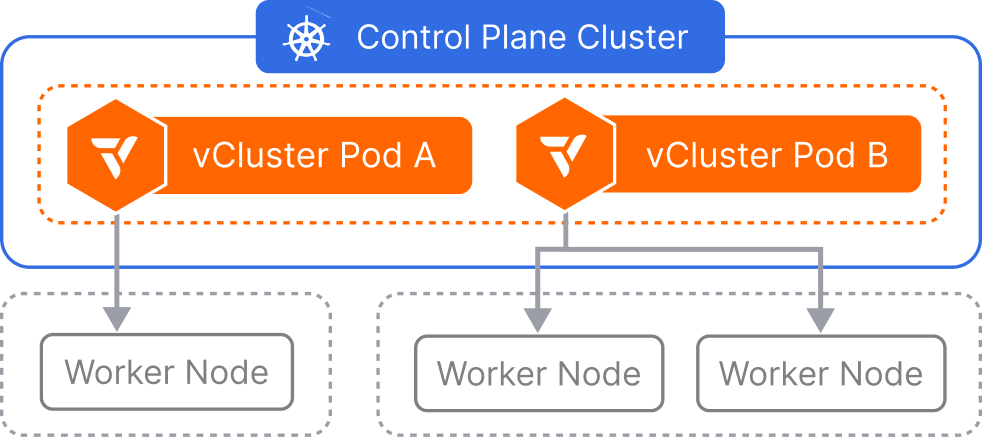
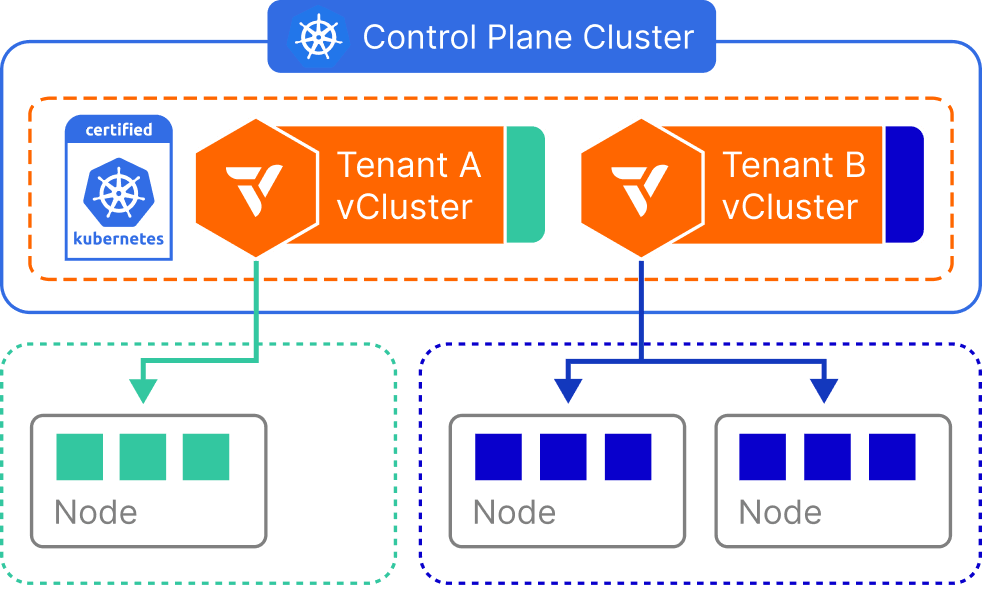
vCluster uses provisioned Machines as Private Nodes, assigning dedicated worker capacity to one production tenant cluster at a time.
This isn’t a side project. Behind every vCluster deployment is 5+ years of deep K8s engineering, security hardening, and battle-tested infrastructure work at massive scale.
Talk to our team about your stack
Deploy vCluster on your infra in minutes
Go live with a hyperscaler-grade tenant experience in days
vMetal is the orchestration and lifecycle layer above infrastructure-specific drivers. The stable Machine API lets higher layers request capacity without depending on the mechanics of each provisioning stack.
Every Machine moves through the same driver-neutral milestones: requested, scheduled, provisioned, joined when used by a tenant cluster, ready, and destroyed. Driver-specific systems perform the underlying infrastructure work.
vMetal provisions the Machine. vCluster requests that capacity through Private Nodes and Auto Nodes, then the provisioned server joins the target tenant cluster as a standard Kubernetes node.
Yes, when a documented vMetal driver supports the infrastructure. Current drivers cover Metal3 bare metal, KubeVirt VMs, BCM existing installations, Terraform or OpenTofu, and Cluster API mechanisms.
Auto Nodes is one vCluster workflow that consumes the vMetal Machine API. It maintains configured Private Node capacity by creating and deleting Machine requests.
vCluster powers 100K GPUs across 50+ GPU Clouds & Fortune 500s. Specific driver support and deployment references should be checked against the current vMetal documentation.
See how vMetal orchestrates your full machine provisioning lifecycle end to end.
