MANAGED KUBERNETES
Ship managed Kubernetes as a product.
Give every customer and every internal team a real, conformant Kubernetes cluster, with its own control plane, its own nodes, and its own admin rights, on infrastructure you own and operate.
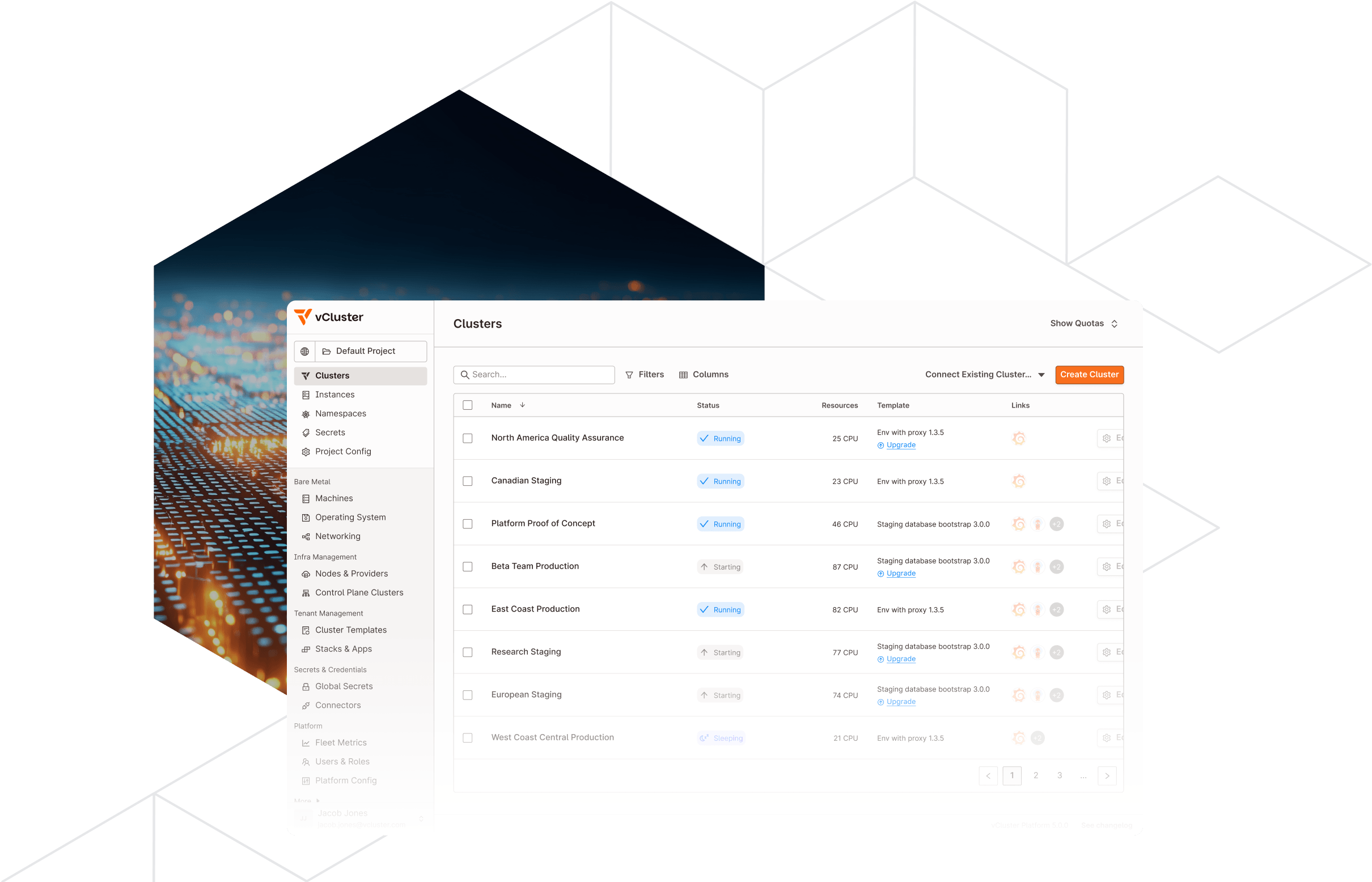
Give every customer and every internal team a real, conformant Kubernetes cluster, with its own control plane, its own nodes, and its own admin rights, on infrastructure you own and operate.
Tenants need their own CRDs, operators, and API versions.
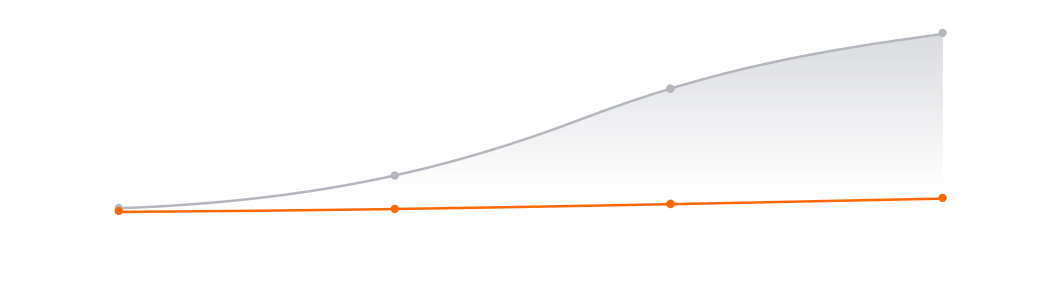
Every control plane is another thing to patch, monitor, and pay for.
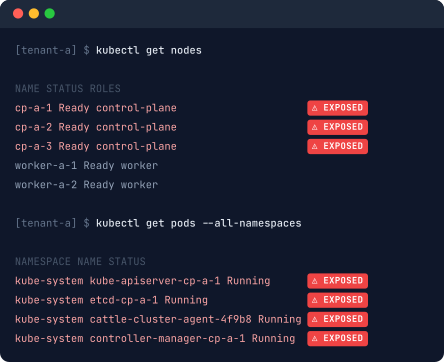
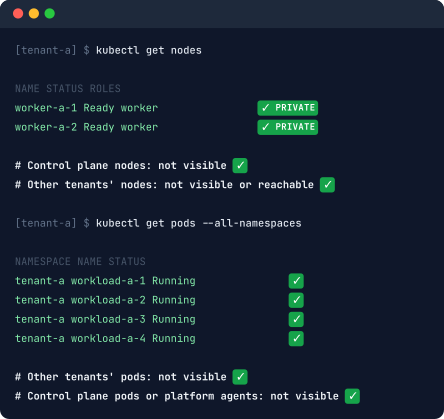
kubectl get nodes exposes your nodes, your agents, and everyone else’s infrastructure.
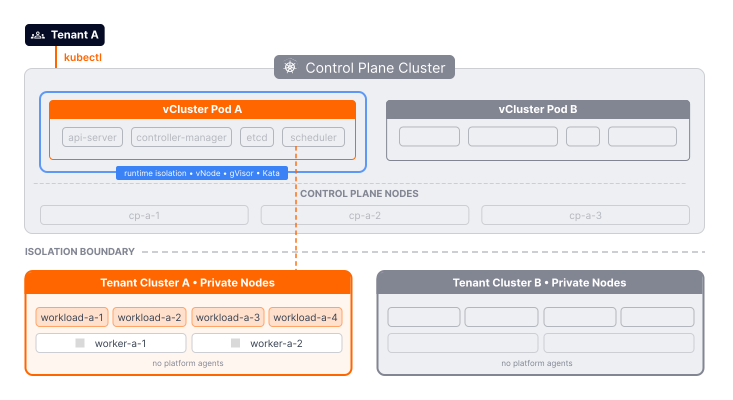
A virtualized control plane per tenant. One fleet and one pool of hardware for you.
Choose the control plane deployment model that fits your infrastructure.
Choose the workload isolation model that matches your security and cost requirements.
Combine with vNode for runtime-level isolation, or pair with gVisor or Kata Containers. Blocks container escapes and kernel exploits at the node level.
Most Kubernetes platforms expose control plane nodes, platform agents, and other tenants’ infrastructure to every tenant. vCluster virtualizes the control plane entirely, reducing your risk as a platform operator and giving your tenants the clean, isolated experience they’d get from a hyperscaler.


No shims, no restricted API subset, no “you can’t install that here.”
kubectl, Helm, Argo CD, and every operator, unmodified.
Dedicated api-server, scheduler, and datastore per tenant.
Install CRDs, register webhooks, hold cluster-admin.
Different Kubernetes versions side by side.
Dedicated bare metal or GPU nodes. No noisy neighbors.
On private nodes, their own CNI and CSI.
Your hundredth tenant should cost what your tenth did.
Seconds, not the tens of minutes a full cluster takes.
Every tenant cluster in one console. RBAC, SSO, and audit built in.
Pack many control planes onto one cluster. Sleep the idle ones.
Roll versions per tenant, per cohort, or fleet-wide.
Per-tenant limits and usage data, GPU hours included.
Every cluster is a Kubernetes resource. Terraform, Argo CD, your portal.
vCluster Platform registers every tenant cluster with Argo CD or Akuity automatically.
Reference a connector by name. Delete the cluster and Platform deregisters it.
ArgoCDApplication and ArgoCDApplicationTemplate live in the tenant’s own vcluster.yaml. Workloads land on day 0.
Define once, reference everywhere. A version bump reaches every cluster on the next sync.
A tenant’s API server never has to be reachable from Argo CD.
# vcluster.yaml
# the cluster and what runs in it, together
argoCD:
  applications:
    name: monitoring
    target: vcluster
    template:
      name: base-observability
    name: gpu-operator
    target: vcluster
    template:
      name: nvidia-gpu-operator
# app-template.yaml
# defined once, referenced by every tenant
kind: ArgoCDApplicationTemplate
metadata:
name: base-observability
spec:
template:
spec:
source:
repoURL: "https://github.com/acme/charts"
targetRevision: "main"
path: observability
syncPolicy:
automated:
prune: true
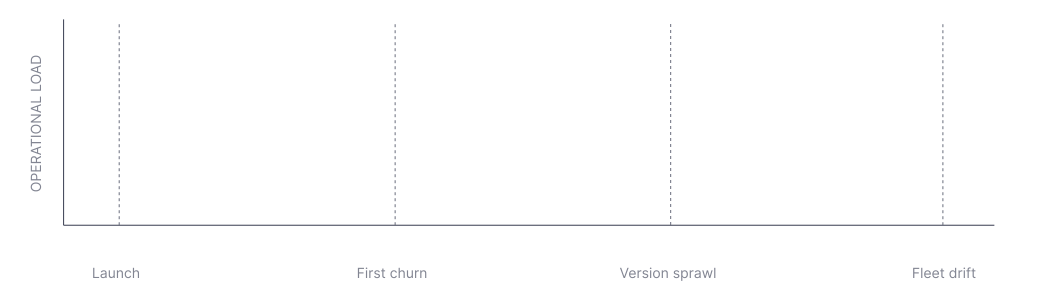
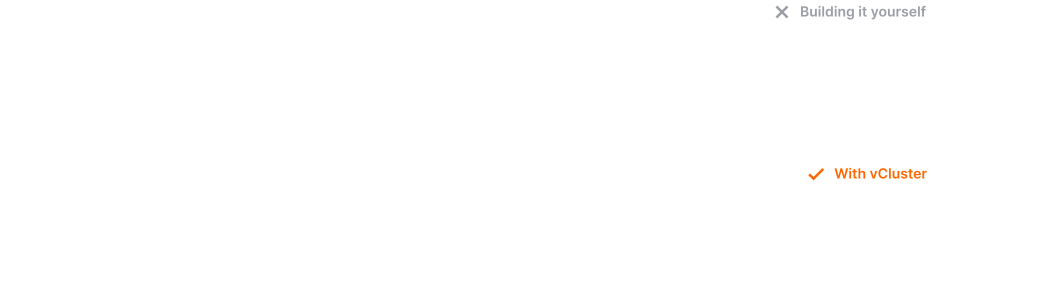
selfHeal: trueLaunch is the easy part. What decides whether a managed Kubernetes offering survives is the load that accumulates behind it.
“Do we spend multiple millions getting a Kubernetes stack up and running on our own, or do we partner with a firm that has actually done this before?”

Harry Georgakopoulos
COO, Boost Run
NVIDIA Preferred Cloud Service Provider delivering enterprise-grade GPU infrastructure across multiple U.S. data centers.
Days from decision
to production launch
New platform engineering
hires required
Boost Run took a GPU-native managed Kubernetes service to market on bare metal, using the Private Nodes model for dedicated GPU isolation per tenant and Netris for automated tenant-level network isolation. Tenants can run GPU Operator, Ray, KServe, AI schedulers, and their own CRDs inside their isolated cluster.
Speed to market is everything in the GPU cloud space. Partnering with vCluster was a deliberate strategic decision.

Andrew Karos
CEO, Boost Run

Learn how to ship a production-ready managed Kubernetes platform with strong isolation, GPU scheduling, and enterprise-grade operations from day one.
vCluster and Netris integrate Kubernetes and network automation.

Learn how to deliver enterprise-grade Kubernetes for AI workloads and improve ClusterMAX™ rating.
Same control plane virtualization, same isolation model, same fleet tooling. Same vcluster.yaml, same Argo CD templates, same Platform console. The next cluster type is a template, not a platform rebuild.
Tenants see only their own partition and jobs.
Tenants see only their own projects and jobs.
Tenants see only their own head node and workers.
Dynamo, llm-d, and more.
Talk to a Kubernetes expert and get a live walkthrough built around your infrastructure and your tenants.
