platform-eng

Noisy Neighbor GPU Kubernetes Isolation

Reduce noisy neighbor GPU Kubernetes contention by assigning Private Nodes to one production tenant cluster at a time. Each tenant also receives its own virtualized control plane and RBAC boundary.

Trusted by the fastest-growing AI cloud providers
Problem

Why Noisy Neighbor GPU Issues Persist

Shared GPU worker nodes expose tenants to competition for compute, memory, network, and storage resources.

Namespaces Do Not Reserve Worker Nodes

Namespace boundaries do not stop workloads on the same worker node from competing for GPU, CPU, memory, network, or storage resources.

Separate Management Stacks Add Work

A separate Kubernetes management stack for every tenant increases infrastructure and operational work.

Runtime Isolation and Resource Contention Differ

Runtime isolation and resource contention are different problems and need controls at the correct layer.

Solution

Tenant Isolation for GPU Kubernetes

vCluster Platform uses Private Nodes as the production default, assigning worker capacity to one tenant cluster at a time. Separate tenant control planes and optional vNode and Netris integrations strengthen the remaining boundaries.

Address GPU Contention at Each Layer

Address noisy neighbor GPU Kubernetes issues with dedicated Private Nodes, separate tenant control planes, and optional runtime and network isolation.

Hardware Isolation

Private Nodes Per GPU Tenant

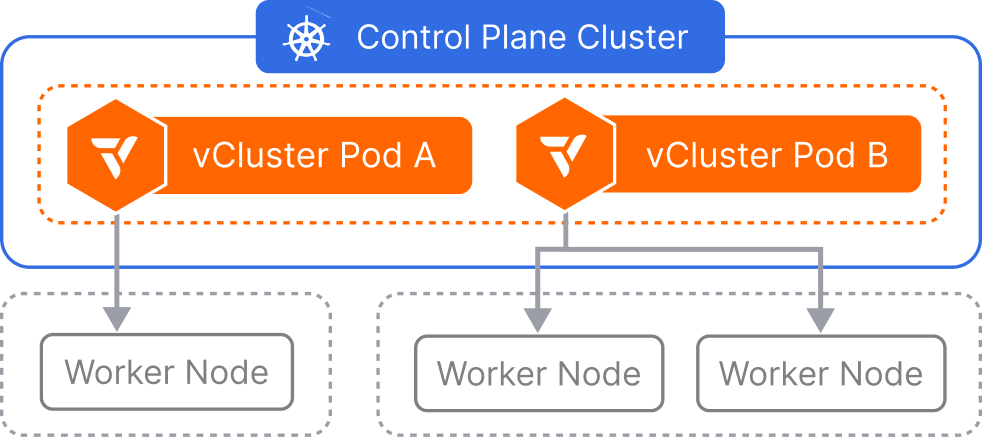
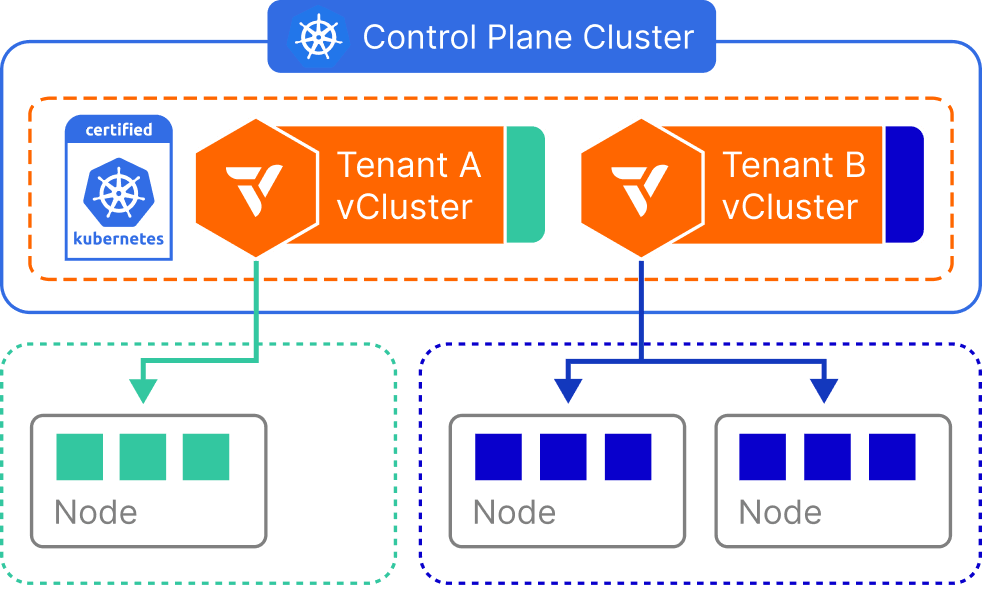
Private Nodes dedicate worker capacity, networking, and storage to one production tenant cluster at a time, removing cross-tenant workload placement from those nodes.

  • Private GPU nodes per tenant
  • Per-tenant CNI and storage
  • No cross-tenant workload placement
Kernel Security

Runtime Isolation With vNode

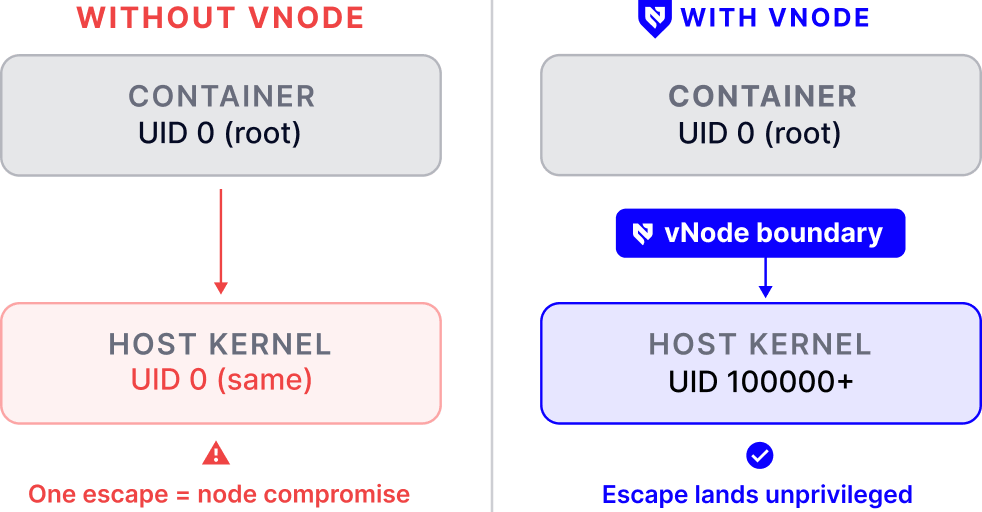
vNode uses Linux user namespaces and seccomp filters to strengthen the runtime boundary without taking responsibility for GPU scheduling or allocation.

  • Stronger runtime boundary
  • No additional VM layer
  • Seccomp filters and user namespaces
Control Plane

Separate Control Plane Per Tenant

Each tenant receives its own virtualized API server and RBAC boundary on the control plane cluster.

  • Separate API server and RBAC
  • Full RBAC per tenant
  • Tenant-scoped control plane
Network Isolation

Optional Hardware Network Isolation

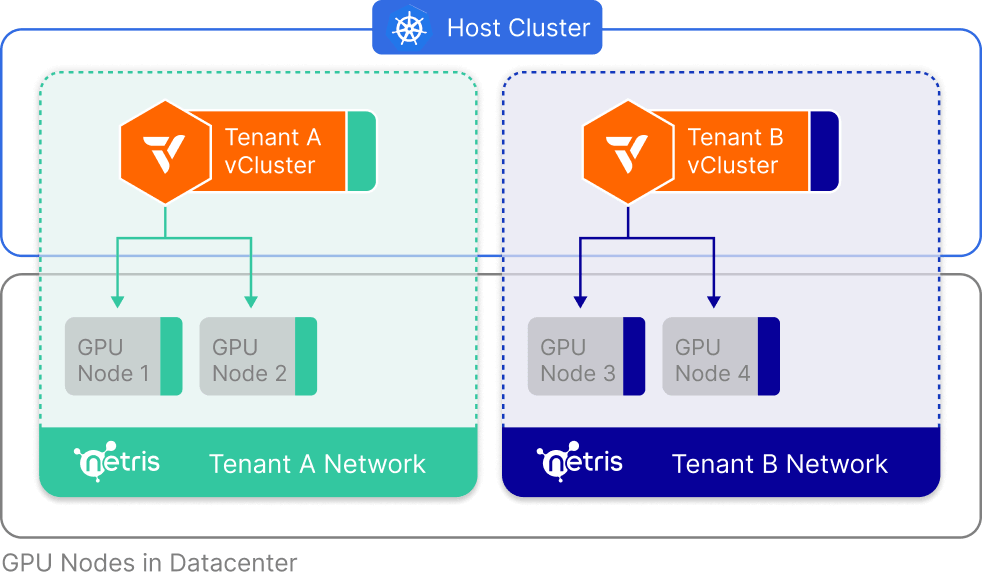
When Metal3 and Netris are configured, separate tenant network environments can receive hardware-backed L2 isolation.

  • Per-tenant network isolation
  • Netris network environments
  • Hardware-backed L2 isolation
Defense in Depth

Tenant-Scoped Workload Boundaries

Private Nodes, separate control planes, and optional runtime isolation keep tenant responsibilities and failure domains easier to reason about.
  • Clear workload ownership
  • Layered isolation controls
  • Isolation by responsibility

Why vCluster

This isn’t a side project. Behind every vCluster deployment is 5+ years of deep K8s engineering, security hardening, and battle-tested infrastructure work at massive scale.

100K+
GPUs Powered
50+
GPU Clouds & F500s
<45
Days to Launch
30K
GitHub Stars

Get Started in 3 Steps

1
Schedule a Demo

Talk to our team about your stack

2
Deploy vCluster

Deploy vCluster on your infra in minutes

3
Onboard Your Tenants

Go live with a hyperscaler-grade tenant experience in days

FAQs

What causes noisy neighbor problems in GPU Kubernetes clusters?

Noisy neighbor GPU Kubernetes issues occur when workloads from different tenants compete for shared worker-node resources such as GPU, CPU, memory, network, or storage capacity.

How does vCluster address noisy neighbor GPU Kubernetes issues?

Private Nodes remove cross-tenant workload placement from the assigned worker nodes by dedicating that capacity to one production tenant cluster. vCluster also gives each tenant a separate virtualized control plane and RBAC boundary.

Can I address noisy neighbor problems without separate control-plane servers?

No separate Kubernetes control-plane servers are required for each tenant. Private Nodes provide dedicated worker capacity, while tenant control planes run as isolated pods on the control plane cluster.

What role does vNode play in GPU workload isolation?

vNode adds a stronger runtime boundary using Linux user namespaces and seccomp filters. It does not allocate GPUs or replace the GPU scheduler, device plugin, driver stack, network, or storage performance controls.

What evidence supports vCluster for GPU infrastructure at scale?

vCluster powers 100K GPUs across 50+ GPU Clouds & Fortune 500s and is validated in the NVIDIA DGX reference architecture.

What isolation model should I use for untrusted GPU workloads?

For untrusted production tenants, use Private Nodes as the worker model. Add vNode when workloads need a stronger runtime boundary and Netris when the physical network needs hardware-backed L2 isolation.

Stop GPU Interference Between Tenants

See how Private Nodes address noisy neighbor GPU Kubernetes contention for production tenants.