platform-eng
Separate Cluster Per Tenant Kubernetes for AI Clouds
Give every tenant its own Kubernetes control plane and RBAC boundary. Private Nodes are the production default for dedicated worker capacity, networking, and storage.
Give every tenant its own Kubernetes control plane and RBAC boundary. Private Nodes are the production default for dedicated worker capacity, networking, and storage.
Customer-facing Kubernetes needs stronger tenant boundaries than a shared API server and namespace model.
Namespace-only designs share control-plane and node-level components between tenants.
A separate management stack for every tenant increases infrastructure and operational work.
Shared control-plane components make configuration mistakes and operational incidents harder to contain within one tenant.
vCluster Platform gives every tenant a virtualized Kubernetes control plane and uses Private Nodes as the production default. Operators manage tenants, access, templates, capacity, and observability centrally.
Separate cluster per tenant Kubernetes combines a tenant control plane, Private Nodes, standard APIs, and centralized fleet operations.
Each tenant receives its own virtualized API server and RBAC boundary on the control plane cluster.
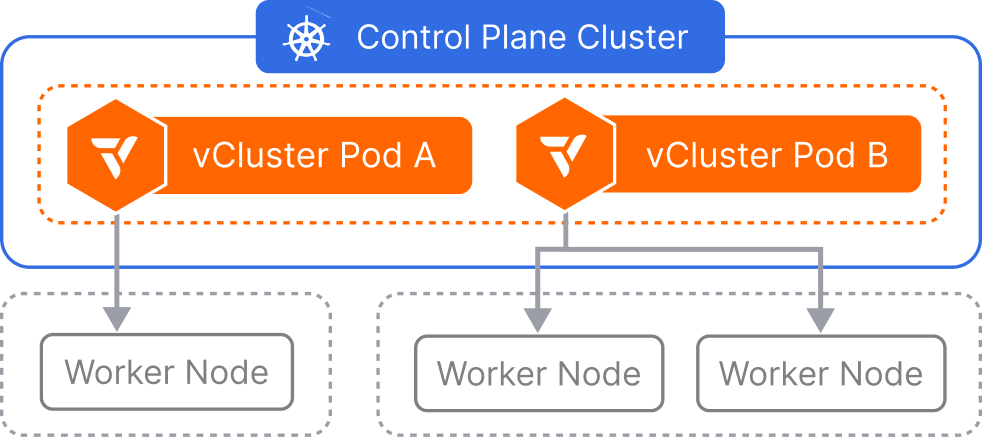
Private Nodes dedicate worker capacity, networking, and storage to one production tenant cluster at a time.
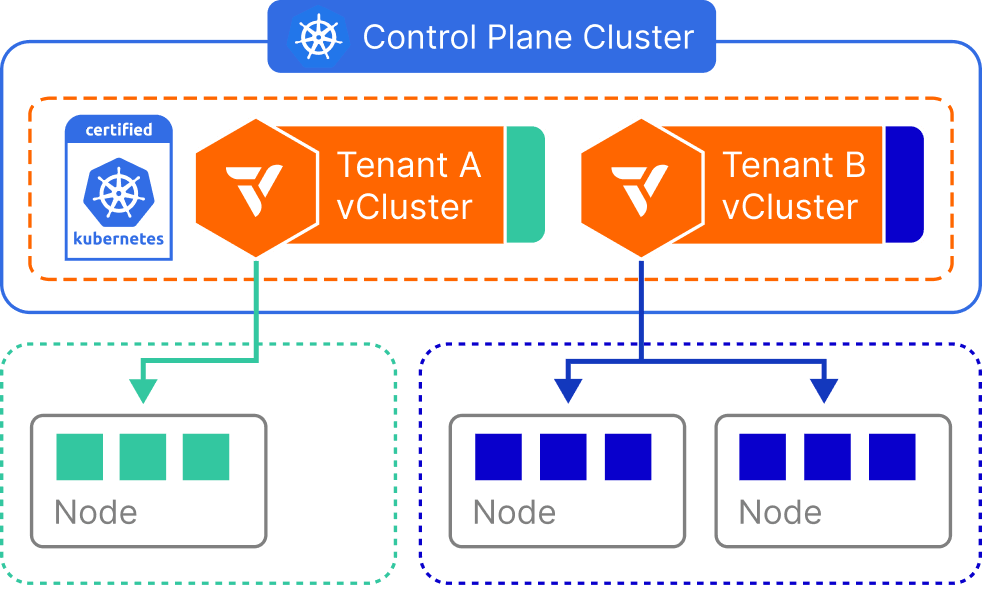
Tenant clusters use a certified Kubernetes distribution and standard APIs for existing tools, CRDs, and operators.
Tenants receive cluster-admin inside their own environment without access to the provider's control plane cluster.
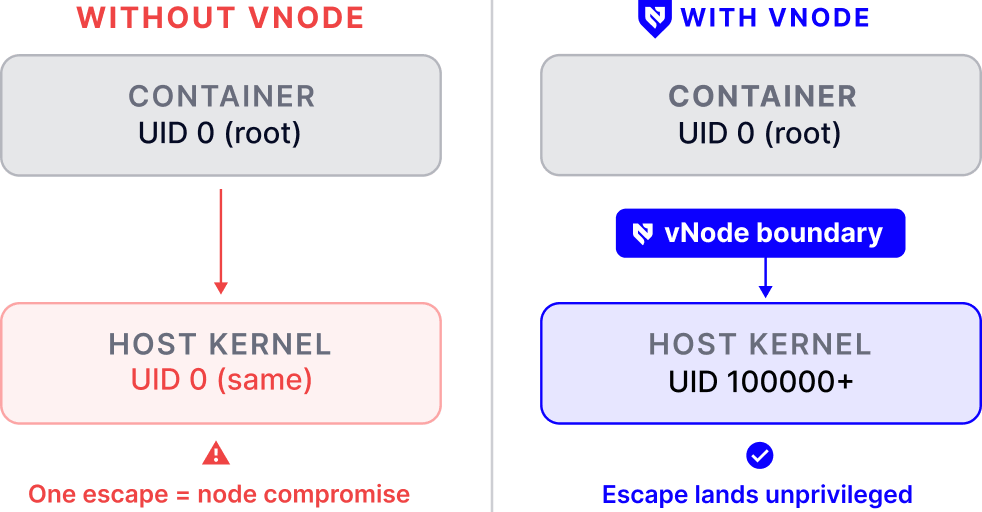
vNode uses Linux user namespaces and seccomp filters to strengthen the runtime boundary for workloads that need additional isolation.
This isn’t a side project. Behind every vCluster deployment is 5+ years of deep K8s engineering, security hardening, and battle-tested infrastructure work at massive scale.
Talk to our team about your stack
Deploy vCluster on your infra in minutes
Go live with a hyperscaler-grade tenant experience in days
Separate cluster per tenant Kubernetes gives each tenant its own API server, controller manager, resource namespace, and RBAC boundary. Tenants use standard Kubernetes APIs without access to the provider's control plane cluster.
vCluster runs each tenant control plane as isolated pods on a control plane cluster. Private Nodes then assign dedicated worker capacity to one production tenant cluster at a time.
Namespace-only isolation shares a Kubernetes API server and node-level components. Separate tenant clusters are the production model for external or untrusted tenants that need a stronger boundary.
Virtualized control planes are lightweight and can be created quickly. Private Node readiness depends on whether capacity is already available or must be provisioned through an infrastructure driver.
Tenant clusters use a certified Kubernetes distribution and standard APIs. Tenants can use kubectl, Helm, operators, CRDs, and their own RBAC inside the tenant cluster.
vCluster powers 100K GPUs across 50+ GPU Clouds & Fortune 500s and provides centralized operations for tenant cluster fleets.
See how vCluster Platform supports separate cluster per tenant kubernetes for ai clouds.
