platform-eng

Slurm on Kubernetes Infrastructure for Operator Evaluation

Explore Slurm on Kubernetes with dedicated tenant infrastructure. vMetal provisions machines, and vCluster supplies Kubernetes environments with Private Nodes for evaluating upstream Slurm operators.

Trusted by the fastest-growing AI cloud providers
Problem

Why Slurm on Kubernetes Is Hard

Most teams underestimate the complexity of running Slurm on Kubernetes at scale.

Weak Tenant Boundaries

Namespace isolation exposes cluster-wide agents and other tenants' nodes, making Slurm workloads in shared clusters a security liability.

Slow, Expensive Setup

Integrating Slurm with Kubernetes manually requires months of engineering work before a single tenant workload can run.

No Self-Service Experience

AI teams expect cloud-native tooling and self-service environments. A manual provisioning workflow drives them back to hyperscalers.

Solution

Dedicated Kubernetes Foundations for Slurm Evaluation

vMetal provisions infrastructure and vCluster supplies Kubernetes tenant clusters with dedicated Private Nodes. Teams can evaluate upstream Slurm operators inside those environments; a packaged managed Slurm offering remains planned. Lintasarta runs 170+ tenant clusters in production.

Infrastructure for Slurm Operator Evaluation

Separate Kubernetes tenant environments and dedicated workers support operator evaluation. Packaged managed Slurm remains planned.

Certified Stacks

Versioned Tenant Application Templates

Certified Stacks provide versioned application deployments. For Slurm evaluation, distinguish Slinky reference implementations from an available packaged managed service. Validate the selected stack, release and Private Node configuration; packaged managed Slurm remains planned.

  • Versioned application configuration
  • Validate selected stack and release
  • Separate managed Slurm availability
Tenant Isolation

Isolated Control Planes Per Tenant

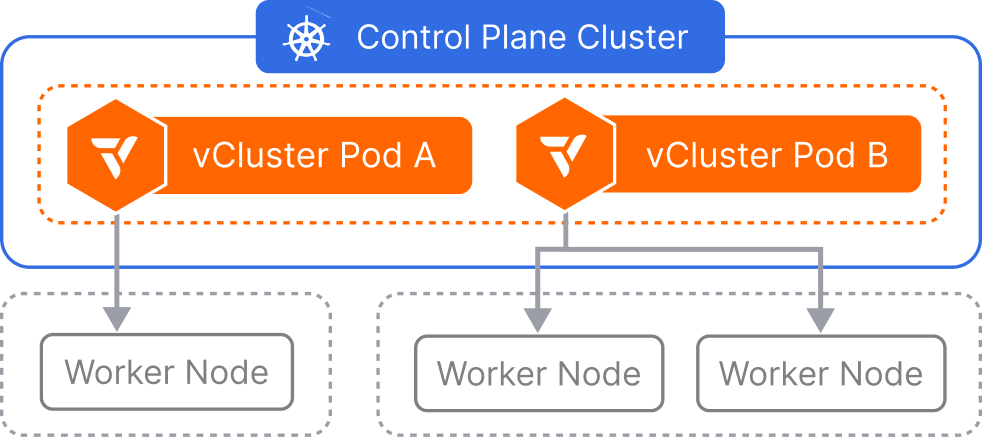
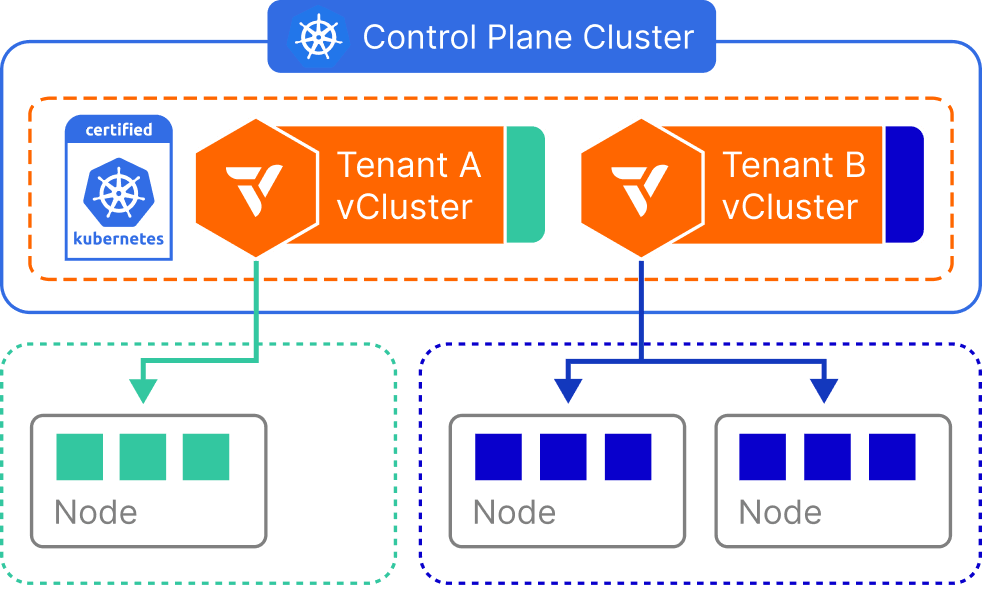
Each tenant has an independent Kubernetes API, data store and RBAC boundary. Lightweight control-plane hosting reduces dedicated server requirements for Slurm operator evaluation; Private Nodes keep production workers tenant-specific.

  • Independent tenant API and data store
  • Tenant-scoped scheduling on Private Nodes
  • No dedicated control-plane servers per tenant
Worker Isolation

Dedicated Workers for Slurm Evaluation

Private Nodes dedicate worker capacity to one tenant cluster, with its own CNI and storage configuration. For Slurm operator evaluation, select physical servers or VMs according to the required infrastructure boundary.

  • Dedicated worker nodes per tenant
  • Tenant-owned CNI and storage configuration
  • Physical servers or supported VMs
Tenant Experience

Self Service Kubernetes Evaluation Environments

Offer approved Kubernetes evaluation environments through Platform interfaces or your portal. Templates govern access and dedicated worker capacity; Slurm operator setup and validation remain separate from self-service cluster provisioning.

  • Approved templates and access policies
  • Dedicated production tenant workers
  • Readiness depends on available capacity
Platform Operations

Fleet Management Across All Clusters

Coordinate tenant environments for Slurm operator evaluation through one UI, CLI and API. Templates, access policies and quotas provide central operator controls while tenant Kubernetes APIs and dedicated production workers remain separate.

  • Central UI, CLI, and API
  • Quotas, templates, and SSO built in
  • Consistent operations across fleet
Why vCluster

This isn’t a side project. Behind every vCluster deployment is 5+ years of deep K8s engineering, security hardening, and battle-tested infrastructure work at massive scale.

100K+
GPUs Powered
50+
GPU Clouds & F500s
<45
Days to Launch
30K
GitHub Stars

Get Started in 3 Steps

1
Schedule a Demo

Talk to our team about your stack

2
Deploy vCluster

Deploy vCluster on your infra in minutes

3
Onboard Your Tenants

Go live with a hyperscaler-grade tenant experience in days

FAQs

Can I evaluate Slurm on Kubernetes with vCluster?

Slurm on Kubernetes uses an operator such as SchedMD’s upstream Slinky to manage Slurm components within Kubernetes. vCluster can provide separate Kubernetes tenant environments with dedicated Private Nodes for evaluation. This is distinct from a packaged vCluster managed Slurm product, which remains planned. Slurm retains job scheduling responsibility; teams must validate operator compatibility, GPU access and operational support.

How does vCluster isolate Slurm environments across multiple tenants?

vCluster gives each tenant an independent Kubernetes API, data store and RBAC scope. Private Nodes dedicate worker capacity to that tenant, including its own CNI and storage configuration. vMetal orchestrates the machines underneath. This separates tenant administration and worker placement; shared infrastructure, application permissions and network policies still require an explicit security design.

Is a packaged managed Slurm integration available?

The public vCluster roadmap still lists the packaged Slurm platform as planned. Upstream Slinky is available separately, but that does not establish a supported vCluster Certified Stack or managed service. Teams evaluating Slurm on Kubernetes must configure and validate the operator, tenant worker model and infrastructure themselves, including scheduling, storage, networking and support responsibilities.

Can vCluster run Slurm on Kubernetes on bare metal GPU servers?

Bare metal Private Nodes can supply dedicated GPU workers to a Kubernetes tenant environment. vMetal orchestrates supported machine provisioning after infrastructure setup. An upstream Slurm operator can then be evaluated within that environment, subject to its own requirements and compatibility. This describes an infrastructure foundation and evaluation path, rather than an available packaged managed Slurm service.

Is the Kubernetes control plane used for Slurm CNCF-certified?

vCluster is a CNCF-certified Kubernetes distribution and exposes standard Kubernetes APIs in tenant environments. This supports familiar clients, Helm charts and cluster-scoped resources such as CRDs. Certification covers Kubernetes conformance rather than an entire AI platform or customer deployment. Validate the selected version, networking, storage, GPU drivers and runtime integrations for the workloads you plan to support.

What determines readiness for a Slurm on Kubernetes environment?

Readiness depends on dedicated worker capacity, the selected Slurm operator, storage, networking, GPU drivers and validation of job execution. A Kubernetes API becoming available does not mean the Slurm environment is ready. The packaged vCluster managed Slurm offering remains planned, and the approved Boost Run timeline describes managed Kubernetes rather than a Slurm service launch.

Plan Your Slurm Tenant Infrastructure

Explore dedicated workers and infrastructure requirements for evaluating Slurm on Kubernetes.